
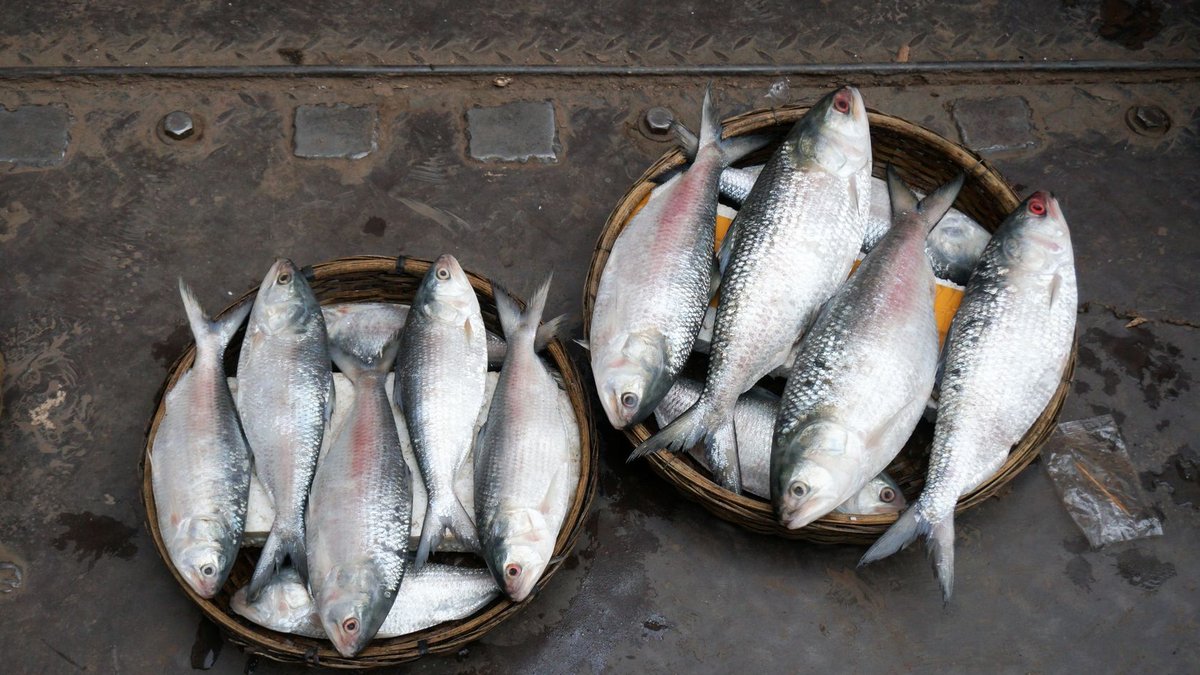
To support the country’s national fish, the hilsa, the government has launched initiatives aimed at increasing its production. These efforts include stricter law enforcement and measures to prevent the killing of jatka, the juvenile form of hilsa.
According to experts, a recovery in production depends on ensuring fishermen’s active participation and balancing their livelihoods with conservation efforts. Officials from the Fisheries Department have stated that fluctuations in hilsa production are normal and do not warrant immediate concern.
Measures to Enhance Hilsa Production
Md Abul Kalam Azad, who serves as the deputy director of the Hilsa Resource Management Section within the Department of Fisheries, announced that a new project is set to begin shortly after approval. This follows the conclusion of the “Hilsa Resource Development and Management Project.”
The upcoming project, named “Sustainable Development of Hilsa through Conservation of Mother Hilsa and Jatka,” focuses on strengthening law enforcement, utilizing mobile courts, and creating employment opportunities. The VGF coverage has been expanded from 620 thousand to 646 thousand.
State Minister for Fisheries and Livestock Sultan Salauddin Tuku emphasized that safeguarding hilsa is a collective responsibility, not solely the government’s duty. He believes that joint efforts to enforce the ban will boost production and benefit fishermen in the long run.
Hilsa Production Trends
Dr Masud Rana, who chairs the Department of Fishing and Post Harvest Technology at Sher-e-Bangla Agricultural University, highlighted that hilsa constitutes approximately 12 percent of the total fish production. In 2023-24, the output reached 529 thousand tonnes, valued at around Tk 206.8 billion. However, it decreased to about 500 thousand tonnes in 2024-25, marking a 5.5 percent decline after a period of consistent growth.
Dr. Rana also pointed out that while government regulations permit industrial trawlers to operate beyond 40 meters in depth, there are accusations of trawling occurring within restricted areas. He stressed the importance of effectively protecting mother hilsa through patrols, regular enforcement beyond the ban period, pollution control, and data-driven management plans focused on hilsa spawning grounds.
In contrast to other areas, hilsa production has risen in Gujarat’s Narmada estuary and the Bharuch region. This increase may be attributed to heavy rainfall, changes in salinity, favorable conditions for hilsa migration, and seasonal fish availability. This suggests that a combination of environmental factors and conservation efforts can contribute to the recovery of hilsa production.
Dr Rana suggested that advanced technologies such as satellite and GIS can track hilsa movements and breeding areas, while AI and machine learning can predict migration patterns. Additionally, IoT sensors can monitor water quality, DNA and hydroacoustic technology can assess stock levels, and drone and AI surveillance can help curb illegal fishing.
Read Also: Delhi Police Detain Protesters Demanding Poll Chief’s Resignation
Implementing GPS vessel monitoring, smart fishing gear, a digital catch database, and climate-based forecasting would also be beneficial. These tools collectively form a Smart Hilsa Management System aimed at preserving stocks and ensuring sustainable production. The Department of Fisheries is actively working to adopt these technologies to support hilsa conservation.
Impact of Pollution
Research conducted by the Bangladesh Fisheries Research Institute revealed a 68 percent decline in plankton, a primary food source for hilsa, in the Meghna river. This decrease is largely attributed to pollution. Chief Scientific Officer Mohammad Ashraful Alam noted an alarming reduction in plankton levels in the Padma and Meghna estuaries, which has negatively impacted the size of hilsa.
The hilsa plays a key role in the economy and the livelihoods of coastal communities. Approximately six lakh people are directly involved in catching hilsa, while an additional 2.0 to 2.5 million are engaged in related activities such as transportation, marketing, and processing. According to the Food and Agriculture Organization’s 2024 State of World Fisheries and Aquaculture report, Bangladesh ranks second in inland capture fisheries, fifth in aquaculture, and first in hilsa catch.
On August 17, 2017, hilsa was granted Geographical Indication (GI) status. Government initiatives to boost hilsa production include a 22-day ban from October 8 to 29, which must be rigorously enforced to protect the species.
Fishermen Md Liton Hossain, Md Kaiyum, and Niru Khan from the Bishkhali river described how fry are caught using sieve-like nets immediately after hatching. Larger fish are then caught with current nets, and finally, swarms are captured using banned “behundi” nets on trawlers. This highlights the need for effective enforcement of the ban.
Reforming Hilsa Sanctuaries
Prof Md Abdul Wahab from the Department of Marine Fisheries and Aquaculture at Bangladesh Maritime University stressed the need to reassess and redefine the five sanctuaries established in 2005.
He observed that jatka migrate seaward in large groups during March and April but are often killed using banned nets in rivers and by artisanal trawlers operating at depths less than 40 meters.
Government initiatives to enhance hilsa production include restoring river navigability, increasing research efforts, and implementing the 22-day ban from October 8 to 29.
Dr Rana showed the importance of maintaining natural water flow and the estuarine environment of major river basins, including the Padma, Meghna, and Tetulia.


Leave a Reply