
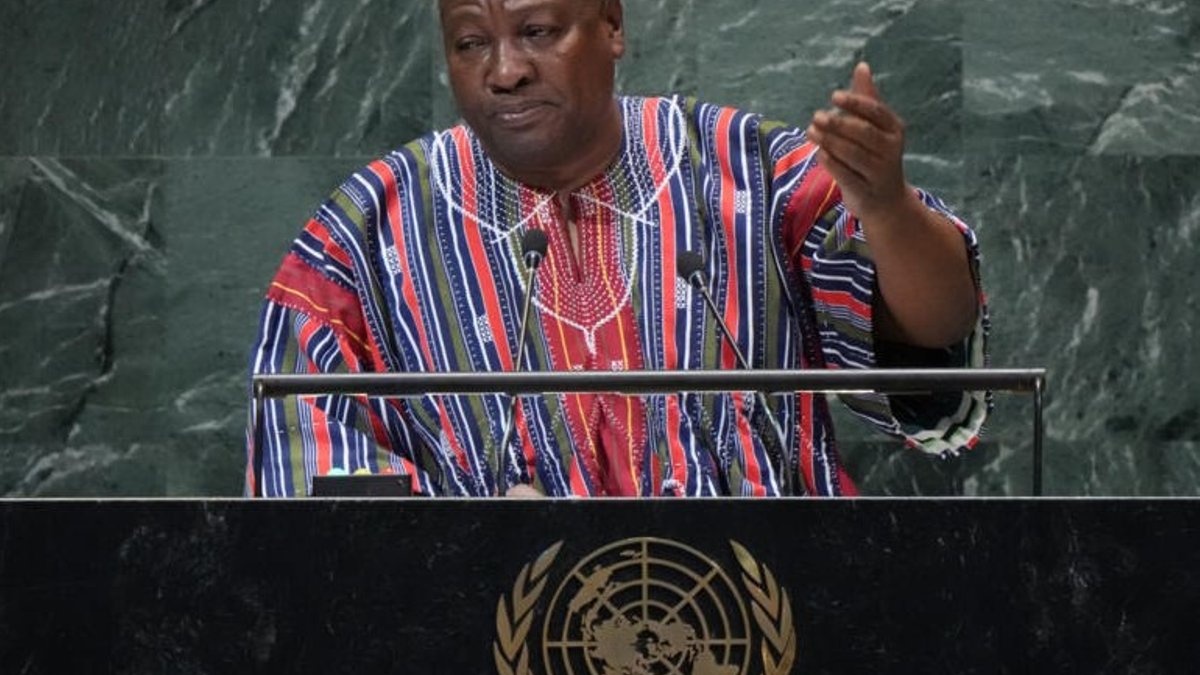
President John Dramani Mahama’s address at the 81st United Nations General Assembly broke from diplomatic convention by framing the organization’s mission as an accountability system. He insisted that credibility depends on defending human dignity through enforceable laws and substantive equality, not empty declarations. The speech rejected the notion that belonging is merely symbolic inclusion, instead defining it as a fundamental right for every individual, irrespective of nationality, race, or background.
Mahama’s critique sharpened when discussing identity politics, where exclusionary ideologies—nativism, xenophobia, and chauvinism—transform discrimination from abstract theory into a structured tool for oppression. The UN’s failure to challenge these hierarchies, he argued, erodes its moral authority. This position set the stage for his call to recognize transatlantic trafficking and racialized enslavement as crimes against humanity under Ghana’s 2026 initiative. He dismissed symbolic gestures as insufficient, insisting that true justice requires dismantling the economic and political systems still built on exploitation.
Africa’s UN Power Gap Demands Reform
The speech then turned to Security Council reform, framing Africa’s exclusion as a crisis of legitimacy. With 1.5 billion people, the continent’s underrepresentation in the UN’s most powerful body violates the principle of sovereign equality. Mahama linked this structural imbalance to economic disparities, where developing nations face higher borrowing costs and climate-related debt burdens they did not create. His argument was clear: uneven power in governance directly translates to unequal survival chances.
On conflicts, Mahama condemned unilateralism and the misuse of veto power, specifically citing the persecution of Palestinians in Gaza and the West Bank. He highlighted the deaths of 20,000 children in the conflict, including Hind Rajab, and demanded consistent application of humanitarian law. Ghana’s recognition of Palestine, support for a two-state solution, and opposition to terrorism were positioned as a rejection of selective moral standards in international crises.
Climate and Health Crises Need Equity
Climate change and global health were framed as existential threats tied to equity. Mahama challenged climate denialism by pointing to Africa’s minimal contribution, less than 4% of global emissions, while bearing disproportionate consequences. He connected local disasters, such as the June 29 event in Ghana and West Africa, to global obligations, emphasizing that climate justice is both a moral and political imperative. In global health, he argued that solidarity cannot be optional, as pathogens disregard borders and GDP. Ghana’s “Accra Reset” initiative, regional vaccine manufacturing and resilient public health systems, was presented as a model for equitable health infrastructure.
Mahama concluded the global section by linking domestic governance to international credibility. He insisted Ghana’s push for UN representation must align with tangible reforms, including economic stabilization, restoring growth, reducing inflation, and cutting debt burdens. Flagship programs like free primary healthcare and the 24-Hour Economy initiative were cited as proof of delivery, not mere promises. The speech’s structure moved seamlessly from moral principle to historical accountability, structural inequality, conflict resolution, and governance credibility, reinforcing a single demand: justice must be actionable, not abstract.
The final segment of the speech addressed how domestic policies could either strengthen or undermine the global principles outlined earlier. Mahama highlighted Ghana’s development of a digital identity system, a centralized platform designed to verify citizenship, streamline public services, and reduce electoral and welfare fraud. The system, set for pilot testing in mid-2026 with full national implementation targeted for 2027, would also expand financial inclusion by enabling unbanked Ghanaians to access digital payments, savings, and credit. Success depended on legislative approval and partnerships with private technology firms.


Leave a Reply