
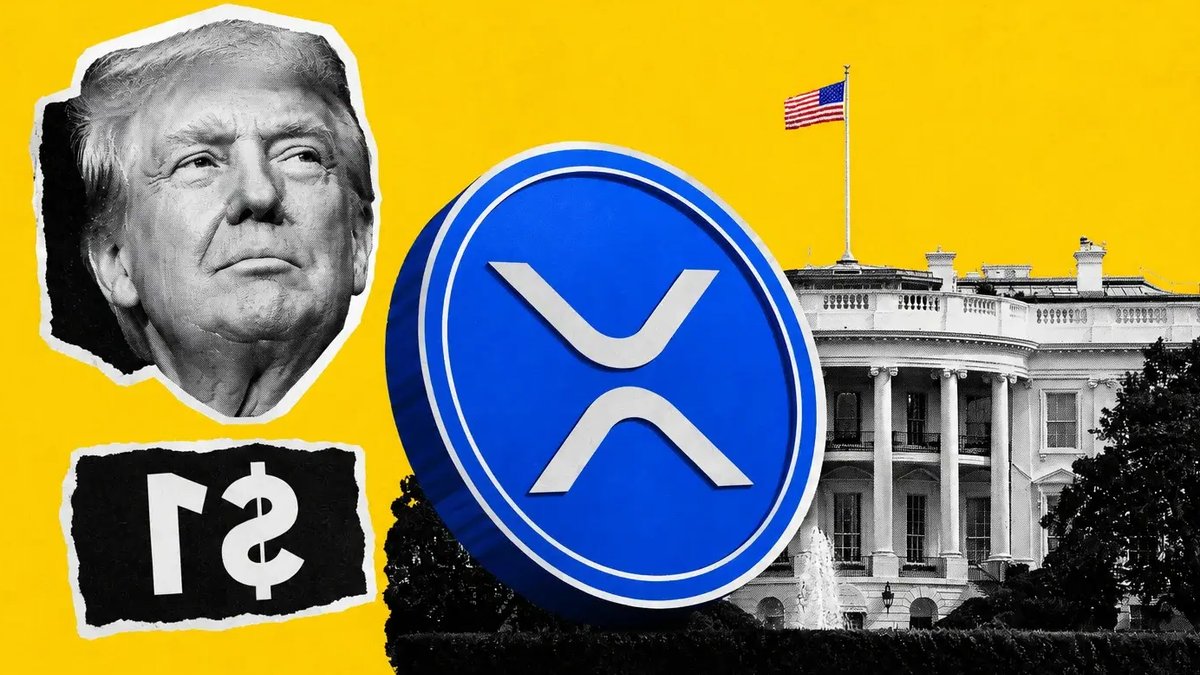
XRP has returned to 2018 price levels after seven years of struggling to reclaim $3. The token now trades at $1.03, down over 71% from its July 2025 peak of $3.65 and roughly half its January 2026 level. Ripple has secured key regulatory victories and institutional partnerships, yet the token’s price has failed to reflect these developments.
The company’s legal and operational milestones include the SEC’s August 2025 decision to drop its appeals, confirming XRP is not a security when sold to retail investors. In December 2025, the Office of the Comptroller of the Currency approved Ripple National Trust Bank, granting a federal charter for custody, fiduciary services, and stablecoin reserve management nationwide. Seven U.S. spot XRP ETFs now hold $1.53 billion in assets and 773 million tokens. Ripple also integrated with Mastercard’s global network, and its valuation reached $50 billion after a $750 million buyback in March 2026.
The disconnect stems from a shift in utility. Ripple Payments processed $1.3 trillion in transactions in Q2 2025, working with over 300 institutions across 55 countries, but only about 40% of those transactions used XRP. The rest settled in dollars, stablecoins, or other assets. Ripple’s own stablecoin, RLUSD, processed $18.4 billion in transfer volume in Q1 2026—volume that would have gone to XRP in earlier years. By March 2026, RLUSD had a market cap of $1.56 billion, pegged 1:1 to the dollar and backed by U.S. Treasuries.
Institutions now prefer RLUSD for its price stability in cross-border settlements. While Ripple positions RLUSD for stable transactions and XRP as a bridge asset, the architecture now favors the stablecoin as the primary growth vehicle. The native token has become optional in this new setup.
Ripple’s stablecoin RLUSD outpaces XRP demand
On-ledger data shows the shift. Active accounts on the XRP Ledger dropped to 7,630, a 51% decline year-to-date. However, real-world asset tokenization on the ledger surged to over $474 million in value, with daily transactions peaking at 3 million on March 15, 2026—a threefold increase from mid-2025 averages. This growth stems from AMM pools, tokenized assets, and RLUSD-denominated settlements, not XRP demand.
Read Also: Solana Holds Steady Amid Rising Fees
The technical outlook for XRP is bleak. The token is near a structural break, with the $0.95 to $1.00 zone acting as critical support. A successful defense could pave the way for recovery, but failure would push it into 2018 lows. The 20-day exponential moving average at $1.0843 remains a key hurdle, with recent highs near $1.0758 failing to break above it. Sustained gains above the EMA could target $1.12, while a drop below $1.065 would bring $1.04 into focus, followed by the $1.00 level.
Broader recovery requires a move above $1.45. Earlier this year, $1.2666 was identified as a key level—holding it could trigger a bounce toward $1.45 with institutional support and legislative tailwinds. Losing it, however, would activate sell-stops, accelerating the decline. The token’s 2026 path shows a collapsing range: a brief rally to $2.41 in January was followed by a drop to $1.11 in early February, consolidation between $1.27 and $1.67 from mid-February to mid-May, and then a resumption of the decline to $1.05 in late May. It has not recovered since.
The pattern reflects a downtrend with lower highs and lower lows. The current range for August is likely $0.95 to $1.20, with $1.45 as the breakout level needed to alter the structure. At $1.03, the token sits in the lower third of this range, with 8% of downside remaining before hitting the $0.95 floor.
Institutional XRP ETFs stall as Bitcoin dominates
The institutional bid that once supported XRP has diminished. Spot XRP ETF inflows now account for less than 1% of daily trading volume. On August 7, XRP ETFs recorded near-zero net change, while Bitcoin funds saw $853.54 million and Ethereum funds $244.9 million in inflows over the same week. The rotation has shifted, with capital returning to crypto favoring Bitcoin and Ethereum over XRP.
Cumulative inflows once peaked at approximately $1.6 billion, even as Bitcoin and Ethereum funds faced record outflows. XRP ETFs were the top performer in early 2026, but that trend has reversed. Bitcoin ETFs have now logged five consecutive weeks of inflows totaling $853.54 million, while Ethereum ETFs saw five weeks of gains totaling $244.9 million. Meanwhile, XRP ETFs remain flat.
Read Also: Intel Shares Surge on Margin Pivot
Price action now depends more on broader market sentiment, Bitcoin’s movements, and Ripple’s ecosystem developments than on institutional allocation. This creates a more volatile environment where XRP trades with higher sensitivity to Bitcoin’s direction and lacks independent support.
Ripple’s most significant corporate achievement carries an unpriced condition. The OCC’s December 2025 approval for Ripple National Trust Bank allows the company to operate as an uninsured national trust bank, offering custody, fiduciary services, and stablecoin reserve management. However, Ripple must meet remaining OCC pre-opening conditions by roughly June 2027 or risk losing the charter. At $1.03, the market has stopped treating Ripple’s milestones as catalysts for XRP. The charter strengthens Ripple’s stablecoin and enterprise business, but its primary benefit flows to RLUSD, the asset competing with XRP for settlement utility.
Senate vote could unlock XRP’s next move
The Senate adjourned without voting on the Digital Asset Market Clarity Act, pushing the decision to September. Passage would be the only near-term path to restoring institutional inflows for XRP. The act’s importance stems from XRP’s classification as a digital commodity. While the SEC and CFTC issued guidance after the August 2025 lawsuit conclusion, legislation would establish definitive market-structure rules, critical for large banks launching custody services at scale. Bitcoin already has institutional infrastructure, but XRP’s adoption hinges on this clarity.
A scenario from early 2026 projected that aligned ETF inflows, the banking charter, and RLUSD integration could push XRP toward $3.00 to $3.50, with a floor near $2.30. Instead, the token now trades at $1.03, leaving a 123% gap to the earlier projection’s floor. September is the decisive month. Passage of the Clarity Act could propel XRP past $1.45 instead of $1.12. Without it, the token will continue trading in tandem with Bitcoin’s movements, with the Federal Reserve’s September 16 decision adding further uncertainty.


Leave a Reply