
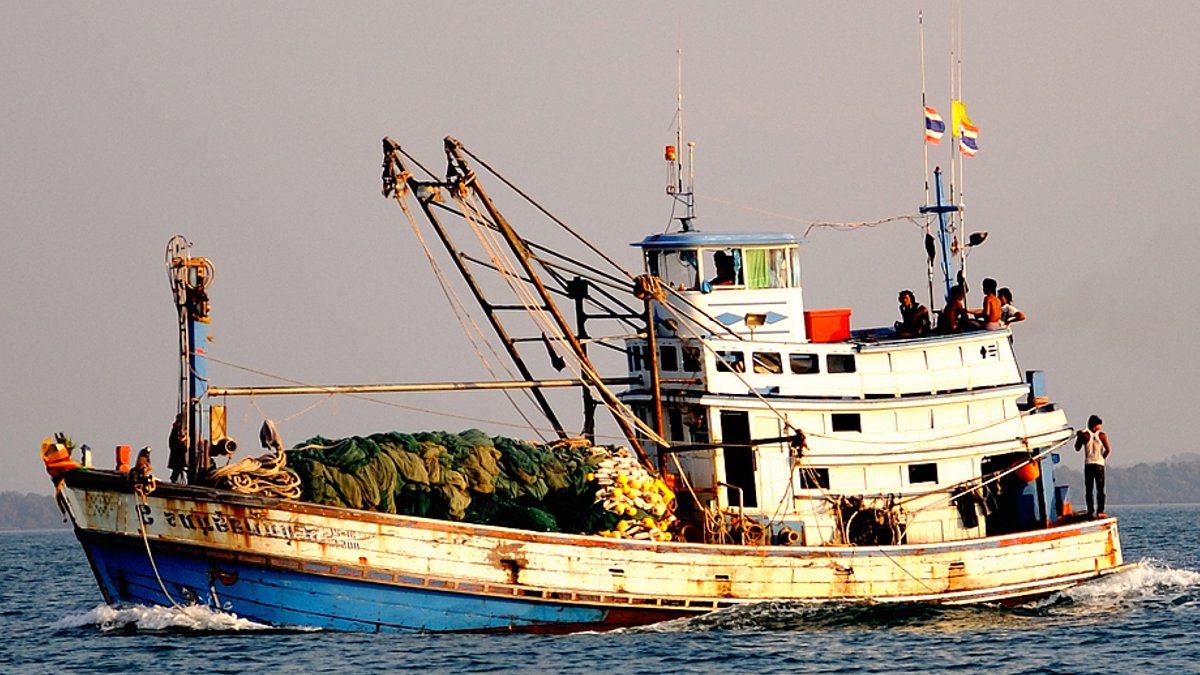
A Netflix series released in June has drawn new focus to long-standing abuses in Thailand’s fishing industry, which earned $11.32 billion in exports last year.
The Thai-language drama Evil Lawyer portrays exploitation in the seafood trade. Workers, many of them migrants, endure forced labor, debt bondage, and violent conditions at sea. The show has renewed criticism that recent legal changes have reduced oversight, despite years of reforms driven by international pressure.
Reforms and rollbacks
Thailand’s fishing fleet decreased from over 50,000 vessels to about 39,000 by 2018 after stricter regulations were introduced to address illegal, unreported, and unregulated fishing. The country also became the first in Asia to ratify the International Labour Organisation’s Work in Fishing Convention (ILO C188) in 2019 to improve labor conditions.
Enforcement, however, has been slow. The convention covers only vessels weighing 30 gross tonnes or more, leaving smaller boats mostly unchecked. Operators take advantage of this loophole by using unregistered shuttle boats to replace undocumented or abused crew members before larger vessels dock, avoiding inspections.
At a Bangkok forum titled Who is the real devil in Thailand’s fishing industry?, representatives from the ILO, the Environmental Justice Foundation, the Migrant Working Group (MWG), and Stella Maris Seafarers’ Centre stated that Thailand’s labor laws remain inadequate. Foreign workers, for instance, cannot form or lead unions, a restriction the fishing industry has opposed. The groups cautioned that ongoing abuses could threaten trade agreements, including a potential deal with the European Union.
Workers trapped in cycles of abuse
The industry has struggled with manpower shortages caused by conflicts with Cambodia. Critics say vessel operators can evade port-in, port-out checks by using small, unmonitored shuttle boats to swap undocumented or abused Burmese crew members out at sea before the main vessel approaches land.
Related: Russia swaps warships for submarine poster at Navy Day
The list of issues includes: the trafficking of migrant workers; forced labour; deceptive recruitment; debt bondage; the sale of migrant workers; ship captains’ seizure of passports or identity documents; long and gruelling hours of work; deprivation of food and clean water; squalid living quarters; risks of workers facing extreme violence; and being trapped on open water for months on end because their catch is sent back via other vessels.
Rising fuel costs, partly due to the war in the Middle East, and a shrinking workforce add to the industry’s struggles. Smaller vessels, exempt from most labor audits, still depend on undocumented workers. Many arrive indebted to recruiters and lack legal protection.
Thailand has long relied on migrant labor to sustain its seafood exports, but the system’s flaws are now harder to ignore. The attention from Evil Lawyer and international pressure may determine whether meaningful change occurs or if exploitation continues unchecked.
Advocates say progress hinges on Thailand ratifying two more ILO conventions, C87 and C98, which would strengthen workers’ rights to organize. Without them, the country’s reputation as a responsible seafood supplier remains uncertain.
Regional stock movements have also reflected shifts in labor and trade policies. Asian markets responded to major corporate changes, showing how closely economic and labor issues are linked.


Leave a Reply