
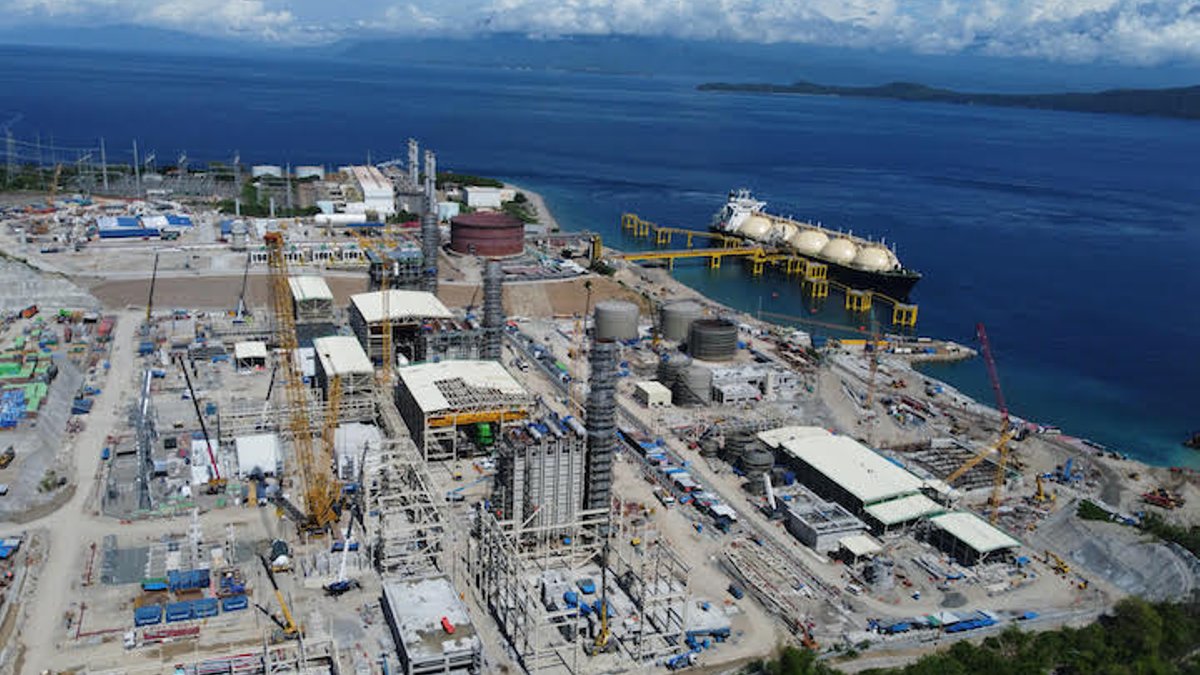
The war in the Middle East has been driving a greater shift to electric vehicles, according to the International Energy Agency, but activists in Southeast Asia fear it may also spur a rush to exploit more oil and gas reserves within the region.
Energy Shift Southeast Asia, a non-government group monitoring the transition away from fossil fuels, briefed a press conference in Bangkok on Monday about concerns over the sluggish development of renewable energy sources in the region.
Countries within the ASEAN region have added 88 gigawatts of coal and gas expansions in the decade since the Paris climate change agreement, plus oil companies and banks are “still advancing massive fossil fuel plans,” spokeswoman Angelica Dacanay said at her presentation.
The amount of additional coal and gas projects commissioned across Southeast Asia since the Paris Agreement was more than double the amount of renewable energy installations over the same period, which she said totalled 33.2 gigawatts.
Over the first eight years of the last decade, financial institutions invested $12.7 billion in downstream gas projects in the region, with 47% coming from international banks from countries such as Japan, while domestic banks in countries such as Malaysia and Thailand put in the remaining 53%.
Related: Top fintech firms ranked in new report
Some of the largest economies in the 11-nation region – Indonesia, Vietnam, Thailand, Malaysia and the Philippines – have all had proponents pushing new gas projects, she said.
Half a dozen projects in Vietnam and the Philippines had been cancelled because of weak demand, but war in the Middle East had potentially serious implications, as there had been “pronouncements by governments across the region looking at developing their own oil and gas reserves,” Dacanay said.
More alarming was the fact that these projects overlap with nearly a fifth (18%) of protected marine areas in the Coral Triangle, which incorporates countries stretching from Malaysia to Indonesia, the Philippines, Papua New Guinea and the Solomon Islands.
They were even threats to marine parks in Malaysia and Palawan in the Philippines, which has been hailed as a ‘last frontier’ of regional marine attractions, she said.
There was also speculation that energy giants such as Shell and Eni will announce projects at the Gastech 2026 event in Bangkok in the middle of next month, given the Anutin government’s desire to become an AI data centre and LNG hub.
Related: China Electric Vehicle Index Historical Data
Oil prices gained close to 3% as the United States and Iran remained deadlocked over a deal to reopen the Strait of Hormuz to Gulf tanker and cargo traffic.
Brent North Sea Crude was up 1.5% at $84.81 per barrel, while West Texas Intermediate was up 1.4% at $79.29 per barrel.
Tokyo climbed more than 2% thanks to advances for Tokyo Electron and Advantest, while Seoul, Hong Kong, Shanghai and Mumbai also closed higher.
The dollar clawed back some of the losses seen Friday in reaction to the US jobs figures, with the dollar/yen up at 158.95 yen from 157.50 yen.
Energy Shift Southeast Asia is concerned.


Leave a Reply