
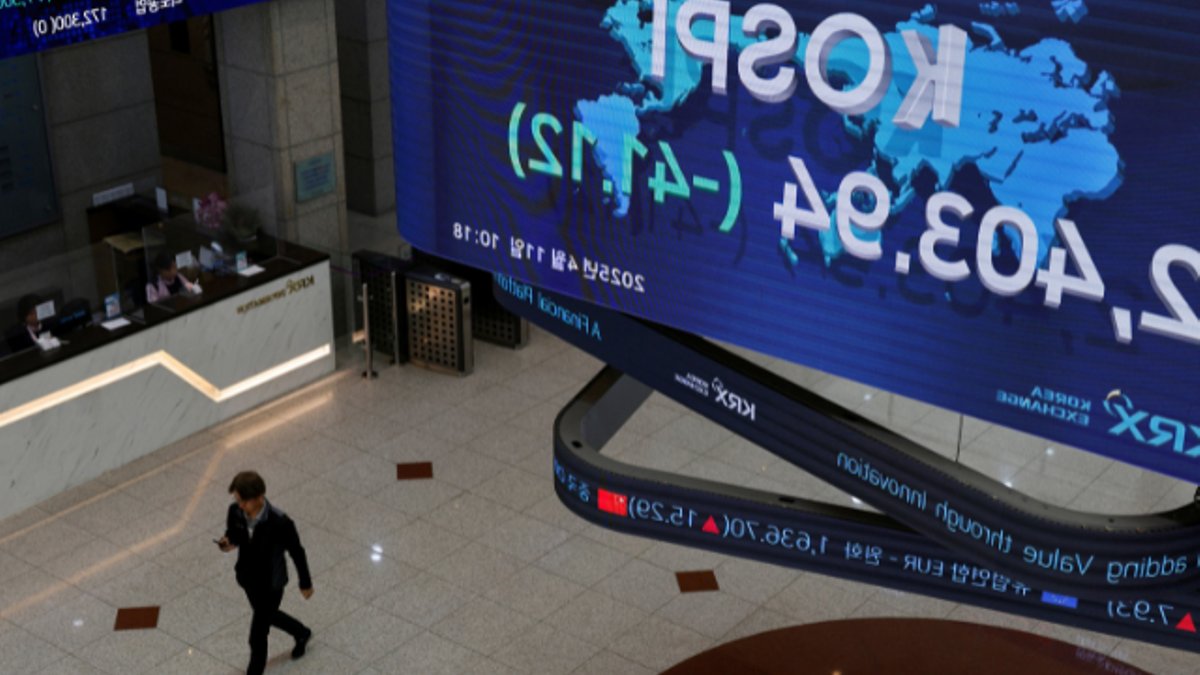
Seoul’s benchmark Kospi index fell more than 4% on Thursday. Investors targeted South Korea’s two largest chipmakers for retaining cash instead of distributing it to shareholders.
Samsung Electronics lost over 6%, while SK Hynix plunged 10%, pulling the broader market down. The sell-off followed demands from activist shareholders for larger dividends and share buybacks from both companies.
Both firms are expected to hold a projected $263 billion in net cash by late this year and don’t have any plans for significant payouts, despite record, AI-driven earnings.
Related: China Bond 50 Index Archives New Records
Activist pressure forces policy shifts
Activist investors are demanding increased shareholder returns, which has forced both companies to promise enhanced payout policies following complaints over conservative 50% free cash-flow targets.
Regional markets follow Seoul’s lead
The sell-off in Seoul spread across Asia, with tech-heavy indices in Tokyo, Hong Kong, and Taipei also closing lower. Japan’s Nikkei 225 lost nearly 1%, with chipmaker Kioxia down more than 10% and Tokyo Electron more than 5% lower.
The broader weakness in tech stocks came after disappointing earnings from U.S. firms SanDisk and Western Digital, raising concerns about the profitability of AI-related investments. A sharp decline in shares of SpaceX on Wednesday also soured the mood, after its earnings results raised worries about huge AI spending.
Related: Asia Tech Stocks Fall on China Fears
Not all markets followed the downward trend. Shanghai’s Composite Index rose, while Sydney and Singapore posted gains. European markets were mostly higher at midday, with London’s FTSE 100 up slightly and Paris’s CAC 40 rising.
Investors are interpreting mixed signals on global growth and corporate earnings. In the U.S., private-sector hiring data released Wednesday fell well below expectations, with job losses in leisure and hospitality.
Oil prices hold steady as Middle East tensions ease
Crude oil prices edged higher on Thursday as investors assessed a potential U.S.-Iran deal to reopen the Strait of Hormuz. Iran said it had agreed a route with Oman for ships transiting the waterway and were adding the final touches to arrangements for jointly managing it. Official sources stressed that any reopening would depend on the United States fulfilling what Tehran sees as its commitment to end its naval blockade of Iran’s ports.
Related: AI surge lifts CXMT to China’s top spot
“Caution in the oil price today is a sign that the market needs confirmation from the White House that this is all true, and the prospects of a deal to reopen the Strait of Hormuz is not a false dawn,” said Kathleen Brooks, research director at traders XTB.
Investors are also awaiting the release of key U.S. jobs data on Friday, hoping for an idea about the state of the economy as the Federal Reserve plots its next moves on borrowing costs.
The Kospi closed at 6,296.38. The Nikkei ended at 65,683.26, while Hong Kong’s Hang Seng Index dropped to 25,530.28.


Leave a Reply