
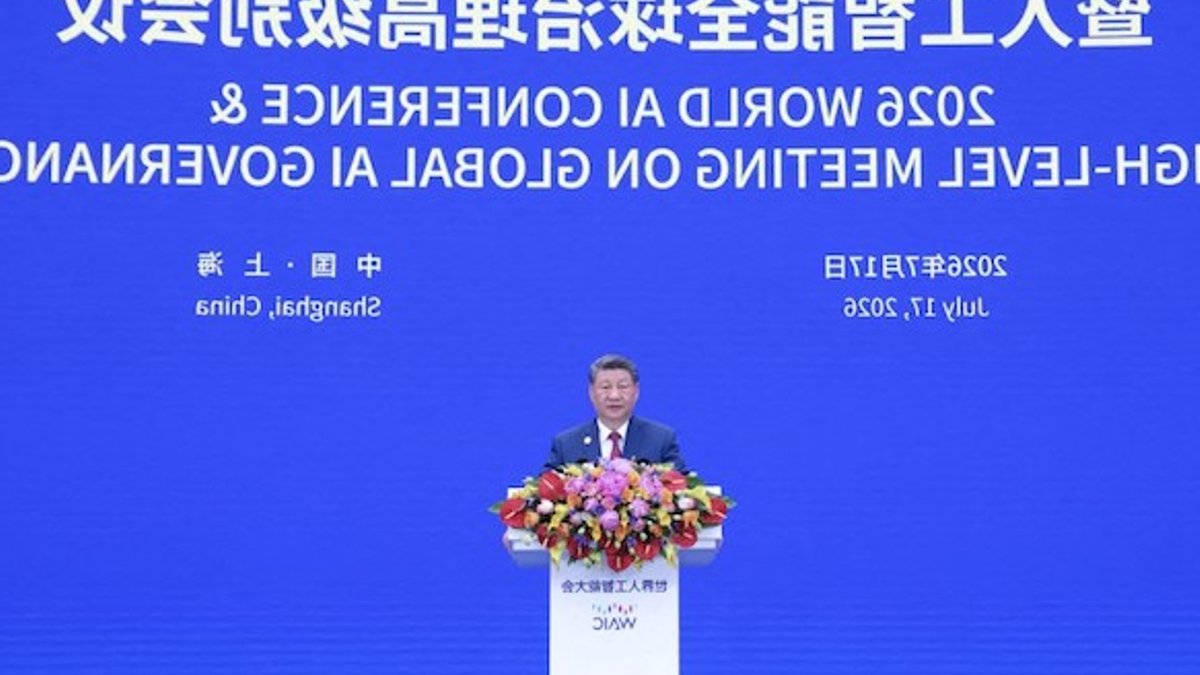
Chinese President Xi Jinping has called for global cooperation to regulate artificial intelligence, stating that no single country should control its development. He spoke at the World AI Conference in Shanghai, framing AI governance as a collective duty and urging international laws and oversight to ensure the technology remains under human control.
“AI development should not be a solo performance by one nation, but a symphony of international collaboration,” Xi said. His comments came as China strengthens its role in both AI innovation and regulation, despite geopolitical tensions that complicate partnerships with Western countries.
China advocates shared AI rules amid US restrictions
Xi’s appeal for cooperation follows years of US and European export controls on advanced semiconductors and AI technologies to China, justified by national security concerns. Those restrictions have intensified competition, with Chinese AI models now matching US systems in performance while offering lower costs.
At the same event, Beijing-based startup Moonshot AI introduced its latest model, Kimi K3, which it says achieves frontier-level results. Other Chinese firms, such as Huawei and MiniMax, also presented new systems built for large-scale use in manufacturing and finance.
Related: AI Safety Concerns Spark Global Debate
State media reports that daily AI usage in China, measured in tokens, has increased a thousandfold in the past two years. This surge reflects domestic demand and China’s efforts to export its AI infrastructure, though analysts warn that inconsistent regulations may hinder adoption.
Xi’s plan for a “people-centered” AI governance framework includes early warning systems and emergency measures to prevent misuse. During the conference, China’s foreign minister and officials from 29 countries, including Russia and Pakistan, agreed to establish an intergovernmental AI cooperation group in Shanghai. The group aims to support the “healthy and orderly” advancement of the technology, but Western nations have largely declined to participate, citing their existing regulatory structures.
Shengyun Lu, founder of Shanghai consultancy Praxis Advisory, likened the need for AI oversight to nuclear power regulation. “The risks are comparable,” he told journalists, though he admitted that aligning global standards would be challenging. New York University professor Arun Sundararajan observed that recent diplomatic improvements between the US and China offered “limited opportunities for collaboration,” but added that a unified governance model was still far off.
“We should jointly oppose overstretching the national security concept in the field of AI or placing one country’s security over that of others,” Xi added.
The divide remains clear. While China’s conference attracted leaders from the UN, Cambodia, and Thailand, US and European officials stayed away. Over four days, the event showcased more than 3,000 products, from high-performance semiconductors to a phone that operates apps independently, demonstrating China’s drive to lead in both AI development and its rules.
Geopolitical strains complicate tech diplomacy
The conference’s emphasis on cooperation clashed with broader US-China tensions, which resurfaced this week over election interference allegations. Beijing rejected claims by former President Donald Trump that China had accessed 220 million US voter records, calling them “fabrications.” Chinese foreign ministry spokesperson Lin Jian labeled the accusations “malicious smears” and urged Washington to examine its own actions instead of politicizing the issue before November’s election.
The argument highlighted the obstacles to Xi’s vision for joint AI governance. While China seeks to influence global standards, its policies—such as strict data localization laws and export controls on critical minerals—have faced criticism from Western governments. These measures have also raised concerns that Beijing might use AI to expand surveillance or military capabilities, making trust harder to build.
China’s rapid progress in AI suggests it will not be excluded. Its tech firms are narrowing the gap with US competitors, and their models are gaining ground in markets where cost and customization outweigh geopolitical considerations. The challenge now is whether the world can agree on how to manage the technology.
Efforts to reduce reliance on foreign-owned firms have accelerated in some sectors. State enterprises in Indonesia, for example, face potential restructuring as part of broader economic reforms.


Leave a Reply