
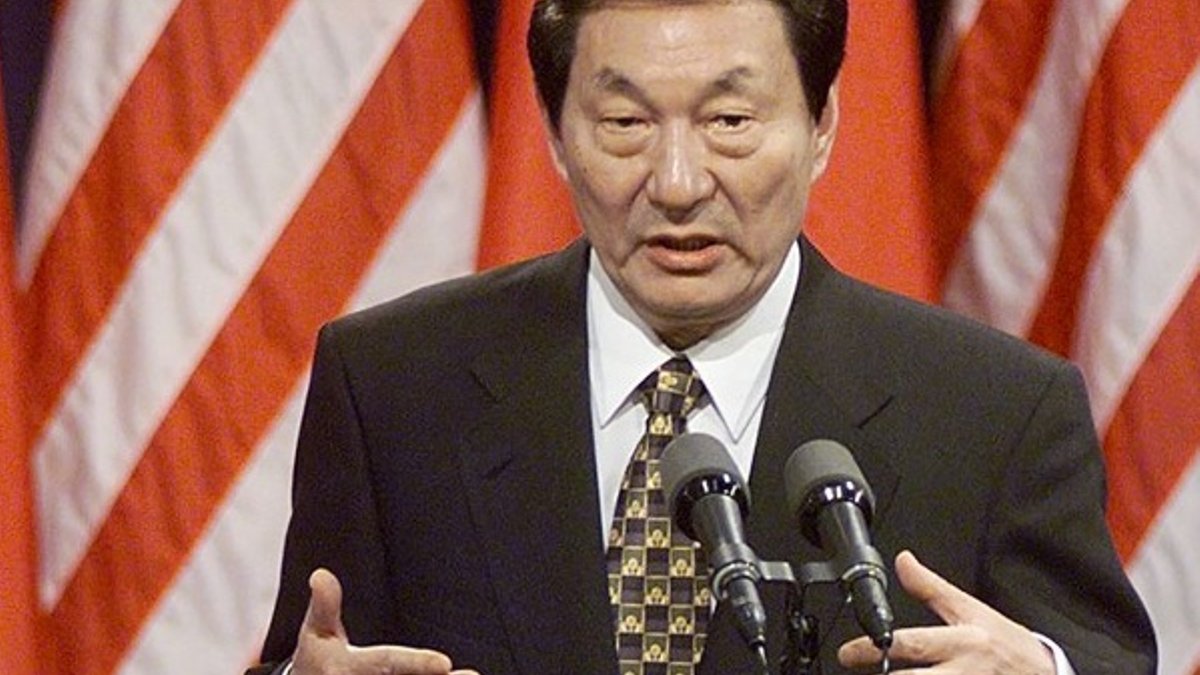
Former Chinese premier Zhu Rongji, whose market reforms and diplomatic efforts reshaped the country’s economy, died on Wednesday at 97.
State media announced his death in Beijing after medical treatment failed. An obituary issued by China’s top political bodies called him “an outstanding leader of the Party and the state” whose life was devoted to public service.
The architect of China’s economic transformation
Zhu took office as premier in 1998 and immediately began restructuring state-owned enterprises. He closed unprofitable ones and introduced urban housing reforms that encouraged home ownership. These changes sparked a boom in real estate and construction, which would soar to become a quarter of China’s economy before a crippling debt crisis struck in 2020.
He also led negotiations for China’s accession to the World Trade Organization in 2001—a move seen as consolidating the country’s transformation from an isolated economy under Mao Zedong to the marketplace of the world. His leadership was credited with helping China avoid the worst of the 1997 Asian financial crisis.
Related: Oil States Block Global Plastics Treaty
The reforms lifted millions out of poverty but also unleashed inequality. Reuters reported on Thursday that Zhu Rongji’s reforms still haunt the country because they created an economic model excessively reliant on real estate, exports, and local government debt, which originated from his structural changes. These policies, which included aggressive state-factory shutdowns, caused massive, long-lasting economic imbalances that current leadership still struggles to resolve.
A legacy overshadowed by Xi’s vision
Zhu’s brand of market reformism, which lifted millions out of poverty but unleashed inequality, fell out of vogue with the ascent of Xi Jinping in 2012. Xi has sought in recent years to move China onto a more balanced development path, as well as cracking down on excessive displays of wealth and private firms and tech giants seen as monopolistic, such as Alibaba’s Ant Group.
The obituary urged citizens to “turn grief into strength” and support the Party leadership with Xi at its center.
On Weibo, China’s largest social platform, Zhu’s death became the top trending topic within hours.
A defining chapter closes
Zhu’s policies set the stage for the country’s rise as a manufacturing and export leader. Yet they also contributed to current problems, including property market collapses and local government debt. While his changes drove growth, they left structural weaknesses.
The obituary honored Zhu as “a long-tested and loyal communist fighter,” a description that contrasts with the current leadership’s more cautious economic approach.
“The life of comrade Zhu Rongji was a life of revolution, a life of struggle, a life of glory,” the obituary said. “It was a life dedicated wholeheartedly to serving the people, one given to the communist cause. His passing is a major loss for the Party and the country.”


Leave a Reply